



In today’s environmentally conscious world, sustainability has become an essential consideration in the furniture industry. Consumers, designers, and manufacturers are increasingly focusing on materials and production methods that reduce environmental impact while maintaining high quality and aesthetic value. Rattan furniture manufacturing has naturally aligned with these goals due to the renewable nature of rattan and the development of modern sustainable production techniques. As a result, the industry has become an important example of how traditional materials and modern innovation can support sustainable design.
Rattan as a Renewable Natural Material
Rattan is widely recognized as one of the most sustainable materials used in furniture manufacturing. It is a fast-growing climbing palm that grows naturally in tropical forests, particularly in Southeast Asia. Unlike hardwood trees that require many years to mature, rattan can grow and regenerate much more quickly.
Another environmental advantage of rattan is that harvesting the material usually does not require cutting down entire trees. Rattan vines can be collected while the surrounding forest remains intact, helping preserve forest ecosystems and biodiversity. This harvesting method supports sustainable forest management and encourages communities to maintain healthy forest environments.
Because of these qualities, rattan has become a preferred material for manufacturers and designers who prioritize environmentally responsible products.
Eco-Friendly Supporting Materials
Modern rattan furniture manufacturing often incorporates additional materials to enhance strength, durability, and comfort. In sustainable production, manufacturers are increasingly choosing eco-friendly supporting materials.
For example, responsibly sourced wood may be used for internal furniture structures, while recyclable metals can provide additional structural support. Natural fabrics and organic textiles are also commonly used for cushions and upholstery. By selecting environmentally responsible materials, manufacturers can create furniture that maintains both sustainability and functionality.
These combinations allow rattan furniture to meet modern design expectations without compromising environmental principles.
Energy-Efficient Production Techniques
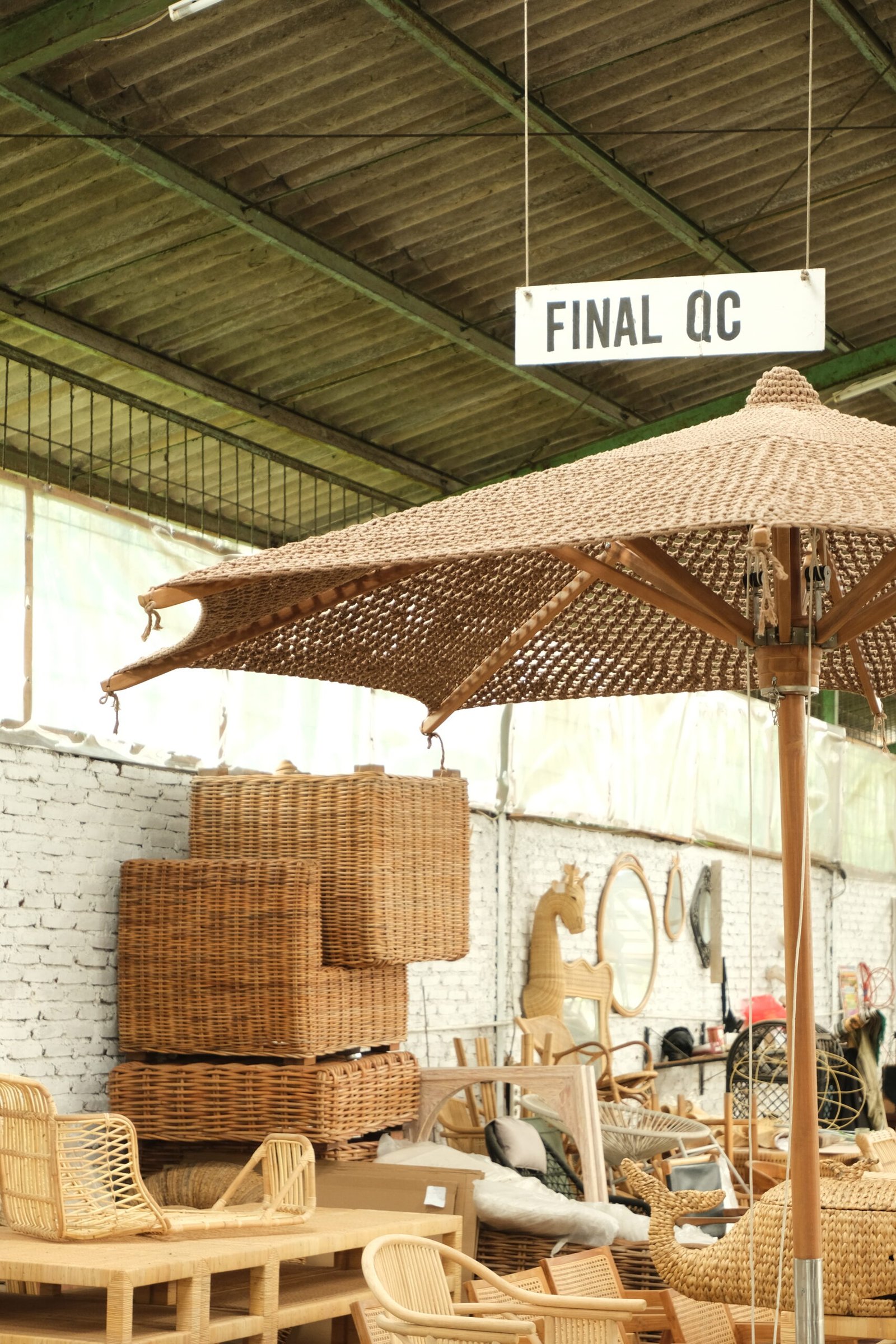
Traditional rattan furniture manufacturing relies heavily on manual craftsmanship. Processes such as weaving, bending, and shaping rattan are often performed by skilled artisans using hand tools. These techniques consume significantly less energy compared to highly industrialized furniture manufacturing methods.
In modern production facilities, manufacturers are also adopting energy-efficient machinery and improved workshop management to reduce energy consumption. By combining traditional craftsmanship with responsible manufacturing practices, the industry can maintain high productivity while minimizing its environmental footprint.
Sustainable Finishing and Coating Methods
Another important aspect of sustainable rattan furniture manufacturing is the use of environmentally friendly finishing materials. Traditional finishes sometimes relied on chemical coatings that could produce harmful emissions.
Today, many manufacturers are adopting water-based finishes, low-emission coatings, and non-toxic stains. These finishing methods help protect the rattan surface from moisture, dirt, and wear while reducing the release of harmful substances into the environment.
Eco-friendly finishing also improves indoor air quality, making the furniture safer for homes, offices, and hospitality spaces.
Waste Reduction and Material Efficiency
Modern rattan furniture manufacturers are also focusing on reducing waste during the production process. Since rattan can be processed into various sizes and forms, leftover materials can often be reused for smaller components or decorative items.
Some manufacturers create additional products such as baskets, accessories, or decorative panels from unused rattan strips. This approach maximizes the use of raw materials and reduces the amount of waste generated during manufacturing.
Efficient material management is an important step in supporting circular economy principles within the furniture industry.
Supporting Local Communities and Traditional Skills
Sustainable rattan furniture manufacturing also has social benefits. The industry provides employment opportunities for local artisans and craftspeople who specialize in weaving and furniture construction.
By supporting skilled labor and preserving traditional craftsmanship, the industry helps maintain cultural heritage while promoting responsible economic development. This social sustainability is an important part of modern sustainable production systems.
Conclusion
Sustainable materials and techniques play a vital role in modern rattan furniture manufacturing. The use of renewable rattan, eco-friendly supporting materials, energy-efficient production processes, and environmentally responsible finishes all contribute to reducing the environmental impact of furniture production.
At the same time, the industry continues to support traditional craftsmanship and local communities. By combining sustainability with innovation and design, modern rattan furniture manufacturing demonstrates how the furniture industry can move toward a more environmentally responsible future.