


As global awareness of environmental sustainability continues to increase, many industries are seeking more eco-friendly materials and production methods. In the furniture industry, rattan manufacturing has gained attention as a sustainable alternative to conventional materials. Rattan, a natural climbing palm that grows in tropical forests, offers several environmental advantages that support sustainable production and responsible resource management. Through its renewable nature, low environmental impact, and role in forest conservation, rattan manufacturing contributes significantly to environmental protection.
Rattan as a Renewable Natural Resource
One of the most important environmental benefits of rattan manufacturing is the renewable nature of the material. Rattan grows relatively quickly compared to hardwood trees, which often require decades to reach maturity. In contrast, rattan can be harvested within a few years, allowing it to regenerate naturally and maintain a continuous supply.
Because of its fast growth cycle, rattan provides a sustainable raw material for furniture and handicraft production. This reduces the need for excessive harvesting of slow-growing timber species, helping to preserve valuable forest resources.
Supporting Forest Conservation
Rattan grows naturally in tropical forests and often depends on existing trees for structural support as it climbs toward sunlight. As a result, harvesting rattan does not require cutting down large trees. This allows forests to remain largely intact while still providing economic benefits to local communities.
The commercial value of rattan can encourage forest preservation. Communities that rely on rattan harvesting have a strong incentive to maintain healthy forest ecosystems, since their livelihoods depend on the availability of this natural resource. In this way, rattan manufacturing helps promote sustainable forest management and discourages deforestation.
Lower Energy Consumption in Production
Another environmental advantage of rattan manufacturing is its relatively low energy requirement during production. Compared to materials such as metal, plastic, or processed wood products, rattan furniture typically requires less industrial processing.
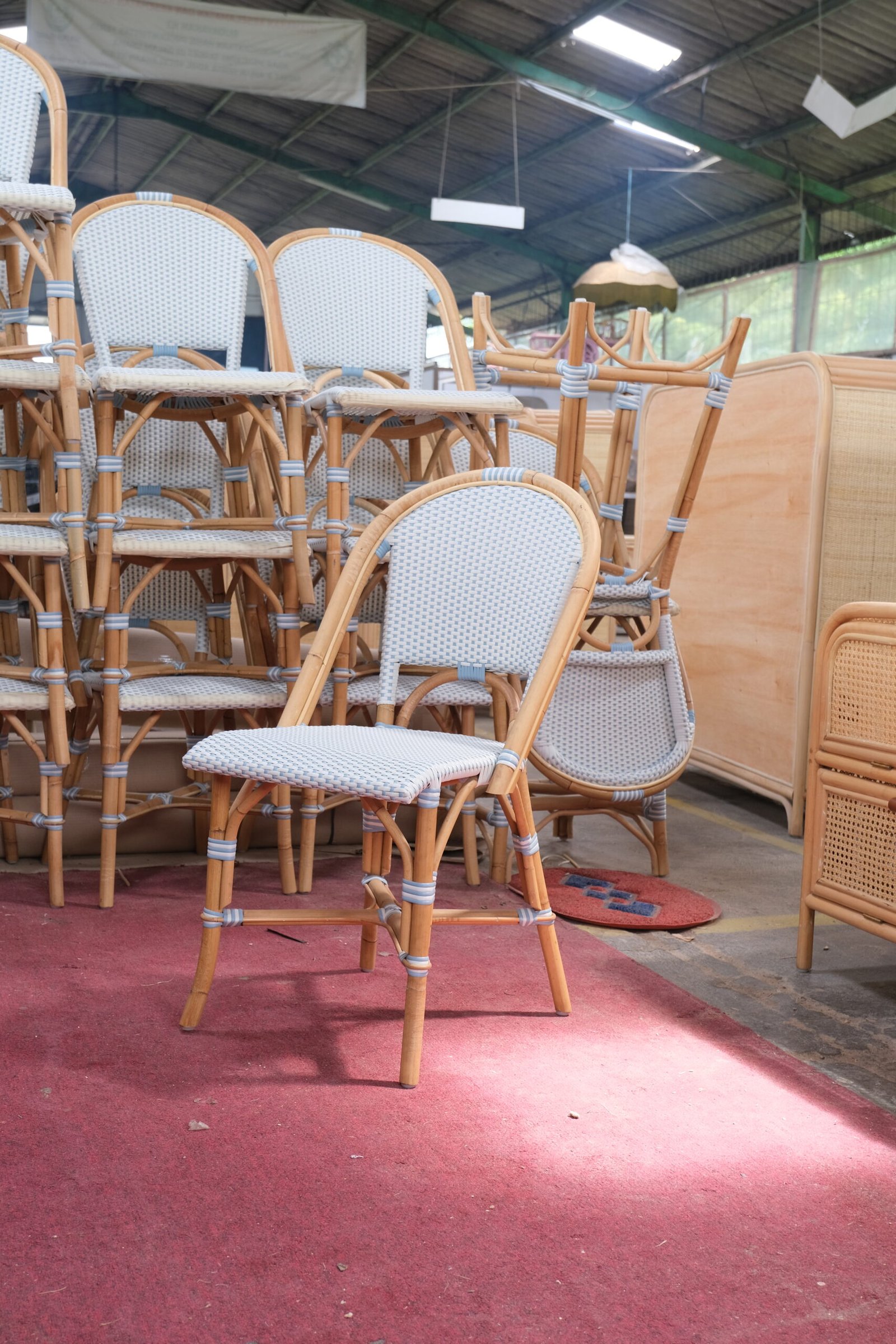
Many stages of rattan manufacturing, including weaving and assembly, rely on manual craftsmanship rather than energy-intensive machinery. In addition, traditional drying methods such as sun drying can further reduce energy consumption during production.
This lower energy demand helps reduce the overall carbon footprint of rattan furniture production.
Biodegradable and Environmentally Friendly Material
Rattan is a natural and biodegradable material. At the end of its product life cycle, rattan furniture can decompose naturally without releasing harmful substances into the environment. This characteristic makes rattan a more environmentally friendly option compared to synthetic materials such as plastic.
Furthermore, many rattan products can be repaired, reused, or repurposed, extending their useful lifespan and reducing waste. This aligns with the principles of a circular economy, where materials are used as efficiently as possible.
Promoting Sustainable Livelihoods
Rattan manufacturing also contributes to environmental sustainability by supporting the livelihoods of rural communities that depend on forest resources. When communities benefit economically from sustainable harvesting practices, they are more likely to protect forest ecosystems rather than exploit them unsustainably.
This connection between economic opportunity and environmental responsibility helps create a balanced relationship between human development and ecological conservation.
Encouraging Eco-Friendly Consumer Choices
As consumers become more environmentally conscious, the demand for sustainable furniture continues to grow. Rattan furniture offers an attractive option for individuals and businesses seeking environmentally responsible products.
Its natural appearance, durability, and renewable origins make rattan furniture appealing to consumers who want to reduce their environmental impact while maintaining high-quality design in their homes or commercial spaces.
Conclusion
Rattan manufacturing provides numerous environmental benefits that support sustainable development in the furniture industry. Its renewable nature, low energy production requirements, and role in forest conservation make it an environmentally responsible alternative to many traditional materials. In addition, the biodegradable characteristics of rattan and its support for sustainable livelihoods further strengthen its contribution to environmental protection. As the global demand for eco-friendly products continues to grow, rattan manufacturing will remain an important part of environmentally sustainable furniture production.