
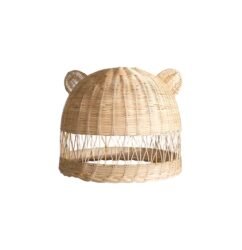



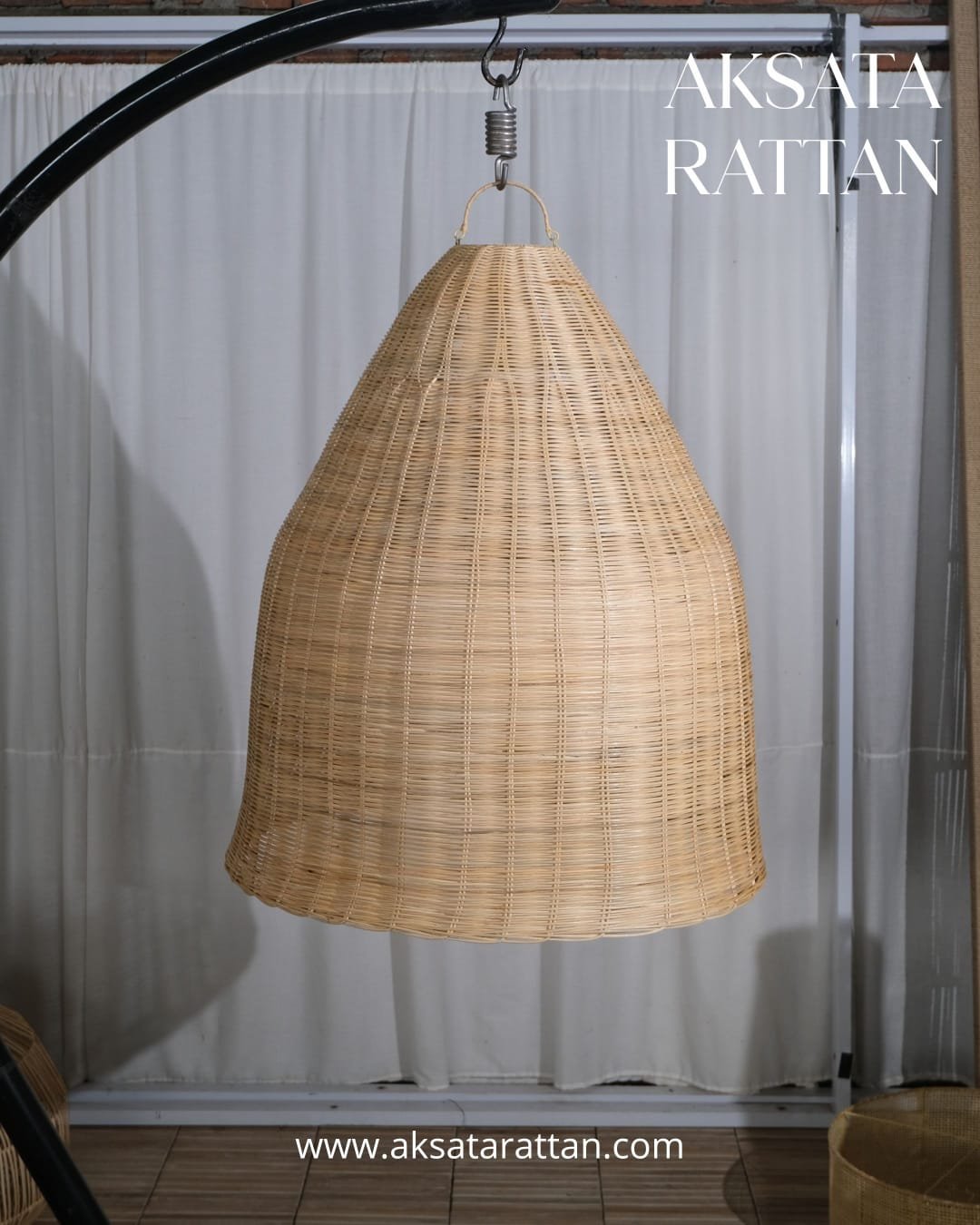
Rattan is a versatile and sustainable material that has been used for centuries in furniture and décor. Among its many applications, rattan lanterns stand out as a perfect blend of craftsmanship, functionality, and natural beauty. The journey from raw rattan to a finished lantern involves a meticulous process that highlights both the material’s qualities and the artisan’s skill.
1. Sourcing and Preparing Raw Rattan
The process begins with selecting high-quality rattan, usually harvested from tropical regions in Asia. Manufacturers prioritize flexible, strong, and smooth rattan strands to ensure the lanterns will be durable and visually appealing. After harvesting, the rattan is cleaned, peeled, and cut into uniform strips. Some manufacturers soak the strips in water or steam them to make them more pliable for weaving.
2. Designing the Lantern
Designing a rattan lantern involves balancing aesthetic appeal with structural integrity. Artisans sketch the frame, determine the weaving pattern, and decide on the lantern’s dimensions and shape. Modern manufacturers often use CAD (Computer-Aided Design) software to visualize complex patterns and test structural feasibility before production begins.
3. Crafting the Frame
The frame serves as the skeleton of the lantern. Rattan strips are bent and secured to form circles, squares, or custom geometric shapes. In some designs, additional materials like metal or wood are used to reinforce the structure, especially for larger lanterns or outdoor applications.
4. Weaving the Lantern
Weaving is the most intricate part of the process. Skilled artisans interlace the rattan strips carefully around the frame, creating patterns that allow light to pass through beautifully while maintaining stability. This step can include traditional motifs or contemporary designs, depending on the intended style of the lantern.
5. Finishing Touches
Once weaving is complete, the lantern is dried thoroughly to prevent mold or deformation. A protective coating, often natural oil or varnish, is applied to enhance the rattan’s color and extend its longevity. Additional elements such as glass inserts, LED lighting, or metal accents may be added to complete the lantern.
6. Quality Control
Before reaching the market, each lantern undergoes strict quality control. Artisans check for even weaving, stability, smooth finishes, and overall aesthetics. Only lanterns that meet these high standards are packaged for sale.
Conclusion
The journey from raw rattan to a stunning lantern is a testament to the skill, patience, and creativity of rattan artisans. Every lantern carries a piece of this craftsmanship, transforming a simple natural material into a functional work of art. Through this process, rattan continues to illuminate spaces around the world, offering a sustainable and elegant lighting solution for modern homes.