




Introduction
Sustainability has become one of the most important considerations in modern manufacturing, particularly in the furniture industry. As global demand for environmentally friendly products continues to grow, manufacturers are increasingly seeking renewable materials and eco-conscious production methods. Rattan, a natural climbing palm that grows in tropical forests, has emerged as one of the most sustainable raw materials for furniture production. Through responsible harvesting, low-impact processing, and long-lasting product design, rattan manufacturing significantly contributes to sustainable furniture production.
Rattan as a Renewable Natural Resource
One of the key reasons rattan supports sustainable furniture production is its status as a rapidly renewable natural resource. Unlike hardwood trees that may require decades to mature, rattan can grow and regenerate much faster. Many rattan species reach harvestable size within five to seven years, allowing forests to replenish naturally after harvesting.
Rattan also grows in tropical forest ecosystems without requiring large-scale plantation development. Because it climbs and depends on existing trees for support, harvesting rattan does not require cutting down trees. This characteristic helps maintain forest biodiversity and reduces deforestation. As a result, rattan harvesting can encourage the conservation of forest areas rather than their conversion into agricultural land.
Environmentally Friendly Manufacturing Processes
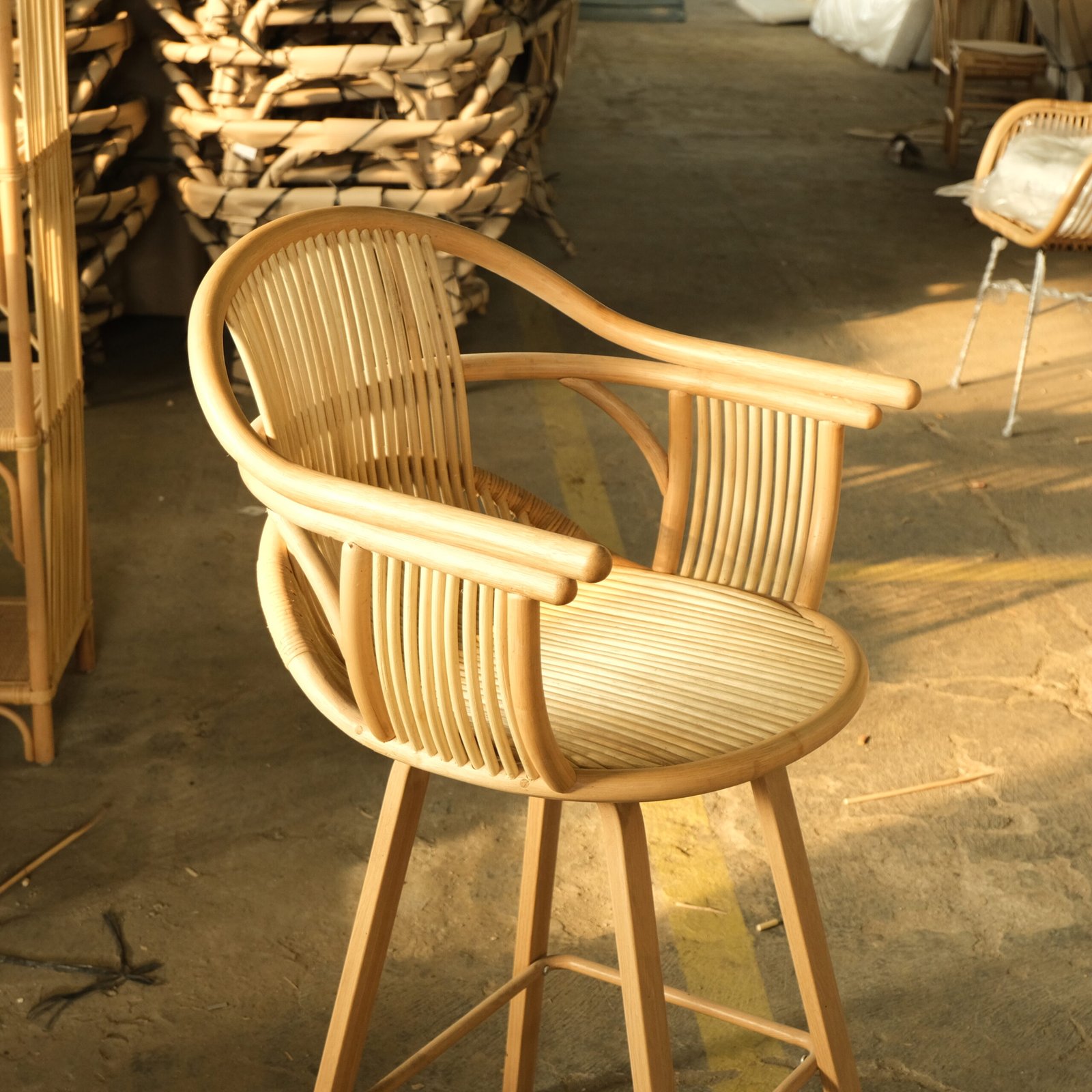
Compared to many other furniture materials, rattan manufacturing generally requires fewer energy-intensive processes. The material is lightweight and flexible, allowing artisans and manufacturers to shape it through steaming, bending, and weaving techniques rather than heavy industrial machining.
In many production centers, rattan furniture is still crafted using a combination of traditional hand-weaving skills and modern finishing techniques. This approach reduces reliance on high-energy machinery and helps minimize carbon emissions during production. Additionally, rattan processing generates relatively little waste, since smaller pieces and fibers can be used for weaving, decorative elements, or composite materials.
Many manufacturers are also adopting environmentally friendly finishing methods, including water-based coatings, natural dyes, and low-VOC (volatile organic compound) finishes. These innovations further reduce the environmental footprint of rattan furniture production.
Supporting Circular and Low-Waste Production
Rattan manufacturing aligns well with the principles of the circular economy. Because rattan is durable and flexible, it can be repaired, refurbished, or reused rather than discarded. This extends the lifespan of furniture products and reduces waste in landfills.
During production, most parts of the rattan cane can be utilized. The outer skin is often used for weaving and binding, while the core can be shaped into structural components such as frames. Even leftover fibers can be processed into smaller decorative pieces or handicrafts. This efficient use of materials significantly reduces production waste and supports low-waste manufacturing practices.
Promoting Sustainable Rural Livelihoods
Beyond environmental benefits, rattan manufacturing also supports sustainable economic development in many rural communities. Countries in Southeast Asia, including Indonesia, the Philippines, and Vietnam, are among the world’s largest producers of natural rattan. In these regions, rattan harvesting and furniture production provide employment opportunities for local communities, including farmers, collectors, and artisans.
By creating economic value from forest resources without destroying them, rattan industries encourage sustainable forest management. Local communities gain financial incentives to protect forest ecosystems where rattan grows naturally. In many cases, rattan production also helps preserve traditional weaving skills and cultural craftsmanship that have been passed down for generations.
Reducing Dependence on Unsustainable Materials
The furniture industry has traditionally relied heavily on hardwood timber, plastic, and synthetic materials. These materials often require significant energy for extraction and processing, and some contribute to deforestation or environmental pollution.
Rattan offers a sustainable alternative. Because it is strong yet lightweight, it can replace heavier wood components in many types of furniture, including chairs, tables, cabinets, and decorative items. Furthermore, natural rattan products are biodegradable, unlike many synthetic furniture materials that may remain in landfills for decades.
As consumer awareness about environmental sustainability increases, many furniture brands are incorporating rattan into their product lines to reduce their reliance on less sustainable materials.
Innovation and Modern Sustainable Design
In recent years, designers and manufacturers have begun integrating rattan into contemporary furniture designs that emphasize sustainability and aesthetics. Modern rattan furniture often combines natural rattan with other eco-friendly materials such as bamboo, reclaimed wood, or recycled metal.
Advances in manufacturing technology have also improved the durability and quality of rattan products. Improved preservation techniques protect rattan from moisture, insects, and weather conditions, allowing furniture to last longer and reducing the need for frequent replacement. Longer product lifespans contribute directly to more sustainable consumption patterns.
Challenges and Future Opportunities
Despite its many advantages, rattan manufacturing still faces several sustainability challenges. Overharvesting, poor forest management, and illegal trade can threaten rattan resources if not properly regulated. Ensuring responsible harvesting practices and supply chain transparency is essential for maintaining long-term sustainability.
Certification systems, sustainable forestry programs, and government regulations can help address these challenges. At the same time, continued investment in research, design innovation, and eco-friendly production technologies will strengthen the role of rattan in sustainable furniture manufacturing.
Conclusion
Rattan manufacturing plays a crucial role in supporting sustainable furniture production. As a rapidly renewable natural material, rattan helps reduce deforestation and supports forest conservation. Its environmentally friendly processing methods, efficient material utilization, and compatibility with circular economy principles make it an ideal material for eco-conscious furniture manufacturing.
In addition, rattan industries contribute to sustainable rural livelihoods and preserve traditional craftsmanship in many producing countries. As the global furniture industry continues to prioritize sustainability, rattan manufacturing is likely to remain an important component of environmentally responsible furniture production in the future.