



Rattan furniture is widely appreciated for its natural beauty, durability, and lightweight structure. Found in homes, hotels, and resorts around the world, rattan furniture has become a popular choice for both indoor and outdoor environments. However, producing high-quality rattan furniture requires a detailed and carefully managed manufacturing process. From the selection of raw materials to the final finishing stage, each step plays a crucial role in ensuring the strength, appearance, and longevity of the finished product.
Selection of Raw Materials
The process of manufacturing high-quality rattan furniture begins with the careful selection of raw rattan. Rattan is a natural climbing palm that grows in tropical forests, particularly in Southeast Asia. Manufacturers must choose rattan that is strong, flexible, and free from major defects such as cracks or pest damage.
Different types of rattan may be selected depending on the intended use of the furniture. Thicker rattan poles are typically used for structural frames, while thinner rattan strips or canes are used for weaving and decorative elements. Selecting high-quality raw materials is essential for producing durable and visually appealing furniture.
Cleaning and Initial Preparation
After harvesting, the rattan undergoes a cleaning and preparation process. The outer skin may be removed, and the rattan is cut into appropriate lengths depending on the furniture design.
In many cases, the rattan is also treated to remove natural moisture and prevent mold or pest infestation. This preparation process helps improve the durability of the material and ensures that it remains stable during the manufacturing stages.
Drying and Preservation
Proper drying is one of the most important steps in rattan manufacturing. Freshly harvested rattan contains natural moisture that must be reduced before it can be used in furniture production.
The rattan is usually dried either naturally under sunlight or through controlled drying processes. This stage prevents future cracking, warping, or structural damage. In some cases, preservation treatments are applied to increase resistance to insects and environmental conditions.
By ensuring the rattan is thoroughly dried and preserved, manufacturers can significantly extend the lifespan of the furniture.
Frame Construction
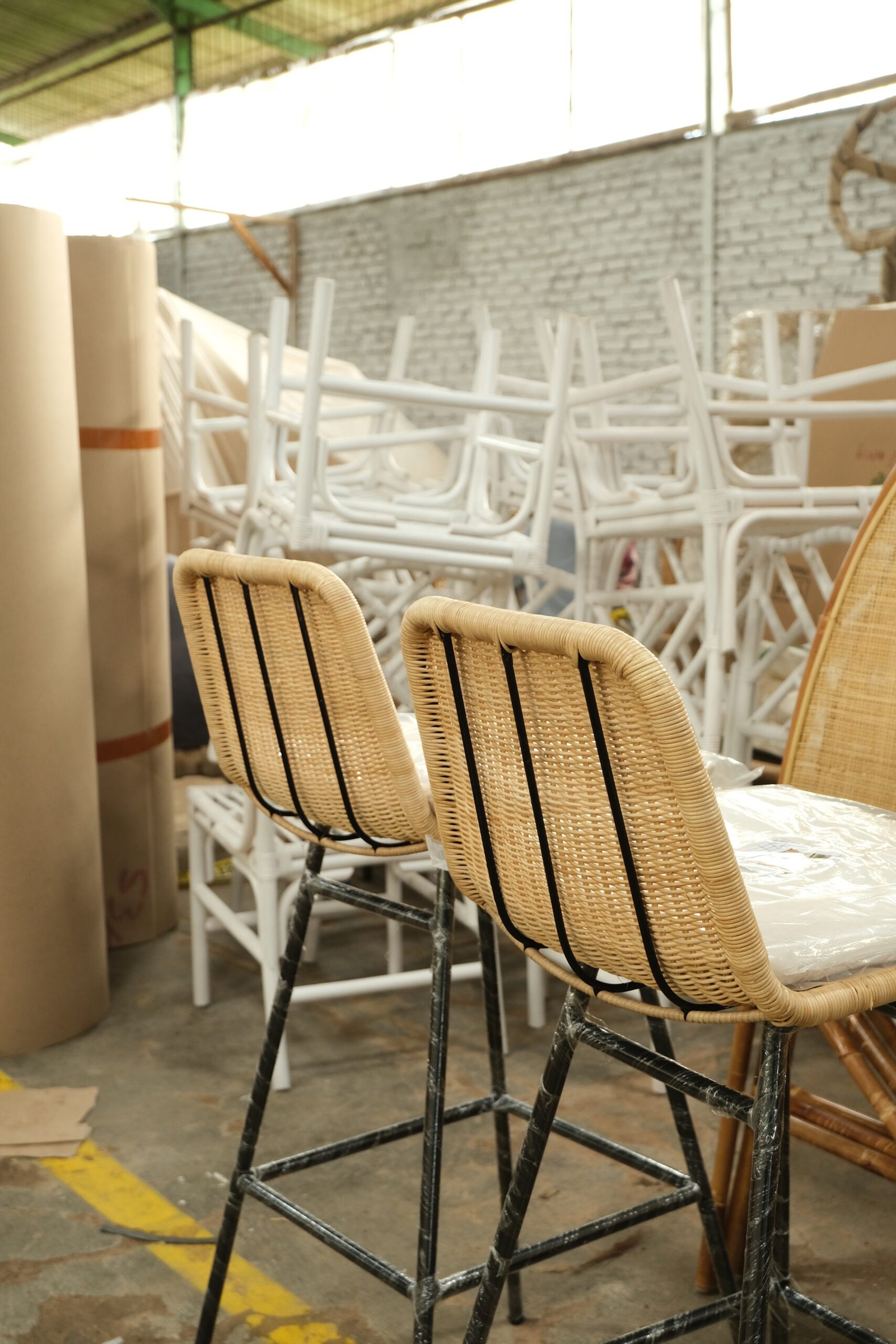
Once the rattan materials are properly prepared, craftsmen begin constructing the furniture frame. Thick rattan poles are shaped and bent to form the main structure of the furniture piece, such as the legs, arms, and backrests.
Heating techniques are often used to soften the rattan, making it flexible enough to bend into the desired shape without breaking. The frame components are then joined together using nails, screws, adhesives, or traditional binding methods.
A strong and well-constructed frame is essential because it provides the foundation for the entire furniture structure.
Weaving and Assembly
After the frame is completed, artisans begin the weaving process. Thin rattan strips or canes are woven around the frame to create seating surfaces, backrests, and decorative panels. This stage requires a high level of craftsmanship, as the weaving must be consistent, tight, and visually balanced.
Different weaving patterns may be used depending on the furniture design. Some patterns focus on structural strength, while others emphasize decorative detail. Skilled artisans carefully maintain tension throughout the weaving process to ensure both durability and aesthetic quality.
Sanding and Surface Preparation
Before finishing, the furniture undergoes sanding and surface preparation. This step removes rough edges, sharp fibers, and small imperfections from the rattan surface.
Sanding also helps prepare the material for coatings or finishes, ensuring that the final appearance is smooth and refined. Proper surface preparation is important for achieving both visual appeal and long-lasting protection.
Finishing and Coating
The finishing stage enhances both the appearance and durability of rattan furniture. Manufacturers may apply various coatings such as natural varnishes, stains, or protective finishes.
These finishes help protect the rattan from moisture, dirt, and everyday wear. Some finishes also enhance the natural color and texture of the rattan, giving the furniture a polished and elegant look.
In modern manufacturing, many producers are also adopting eco-friendly finishes that reduce harmful emissions and support environmentally responsible production practices.
Quality Inspection
Before the furniture is packaged and distributed, it undergoes a final quality inspection. During this stage, manufacturers check the structural stability, weaving quality, and finishing consistency of each product.
Any defects or weaknesses are corrected to ensure that the furniture meets industry standards and customer expectations. Quality control is essential for maintaining the reputation of manufacturers and ensuring customer satisfaction.
Conclusion
High-quality rattan furniture manufacturing involves a detailed process that combines natural materials, traditional craftsmanship, and careful quality control. From raw material selection to final finishing, every stage contributes to the durability, functionality, and aesthetic appeal of the finished product.
As global demand for natural and sustainable furniture continues to grow, the careful and skilled production of rattan furniture will remain an important part of the furniture industry. By maintaining high manufacturing standards and preserving traditional techniques, producers can continue to create beautiful and durable rattan furniture for markets around the world.